Menopause brings a wide range of changes, from hot flashes and sleep disruption to shifts in energy, mood, and weight. While every woman's experience is different, there are practical, everyday approaches that may help make this transition more manageable. This guide covers what to know and where to start.

Menopause typically occurs in a woman's late 40s to early 50s, though the transition, known as perimenopause, can begin years earlier. Hormonal shifts during this time can affect nearly every system in the body, leading to symptoms like hot flashes, night sweats, sleep disruption, mood changes, and shifts in metabolism that many women don't expect.
While menopause is a natural part of aging, that doesn't mean women have to simply "push through" uncomfortable symptoms. Many women are exploring a combination of lifestyle adjustments, nutrition changes, and additional support to help manage this transition more comfortably.
These are common areas of focus for women navigating hormonal changes, practical and worth understanding.

Hot flashes are one of the most recognized menopause symptoms. Dressing in layers, identifying personal triggers like caffeine or spicy foods, and keeping cool at night are commonly discussed strategies.

Hormonal changes can significantly disrupt sleep, even without obvious night sweats. A consistent bedtime routine and a cool, dark sleep environment are often recommended starting points.

Metabolism can shift during menopause, and many women find that nutritional needs change too. Calcium, vitamin D, and protein are commonly discussed as important during this stage.

Hormonal fluctuations can affect mood, sometimes significantly. Recognizing this as a physical, hormonal process and not just stress is an important first step for many women.

Regular movement, even light activity like walking, is often discussed in connection with managing weight changes, mood, and sleep during menopause.

Beyond lifestyle changes, many women explore additional formulas designed to support hormonal balance during the menopause transition as part of a broader wellness approach.
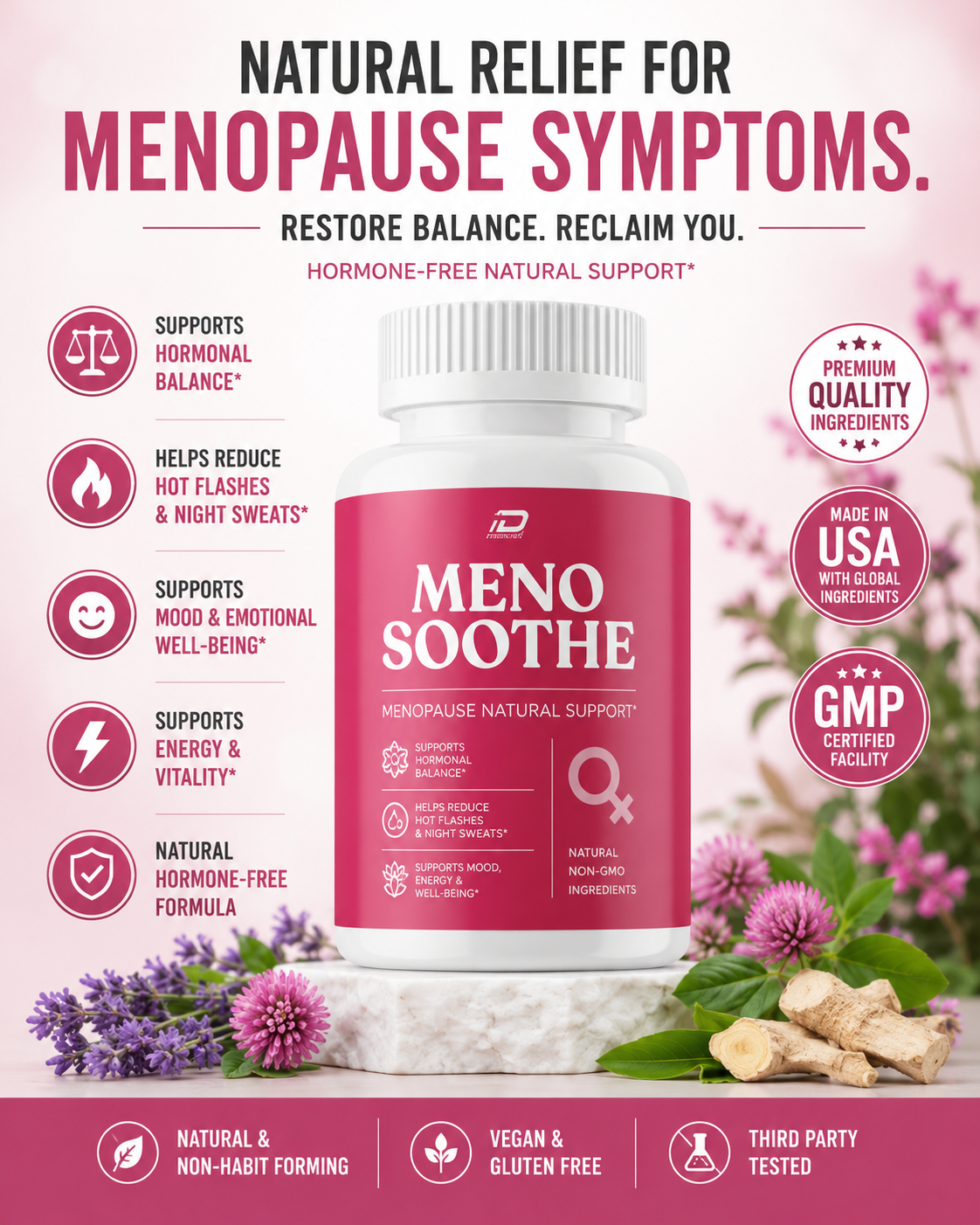
MenoSoothe is a formula designed specifically to support women navigating the menopause transition, addressing the hormonal shifts that contribute to hot flashes, sleep disruption, and mood changes. It's part of a growing category of women's wellness support that many are exploring alongside lifestyle changes during this stage of life.
Small steps can help you feel more in control during this transition.
Note when hot flashes, sleep issues, or mood changes occur to identify patterns.
Cooler bedroom, lighter dinner, and a consistent wind-down time.
More protein at breakfast or a calcium-rich food at each meal.
Simple daily habits many adults are using to support steadier energy throughout the day.